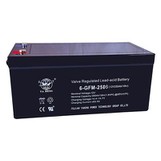
Trickle charging is a method of charging a power supply battery at a very low rate, typically just enough to compensate for the self - discharge of the battery and keep it fully charged over an extended period. As a power supply battery supplier, understanding the concept and application of trickle charging is crucial for providing high - quality products and services to our customers.
How Trickle Charging Works
Trickle charging operates on a simple principle. Batteries, regardless of their type, have a natural self - discharge rate. This means that even when not in use, they gradually lose their charge over time. For example, lead - acid batteries, which are commonly used in various applications such as On - line UPS systems, have a self - discharge rate of around 5 - 10% per month at normal room temperature.
The trickle charger provides a constant, low - level current to the battery. This current is carefully regulated to match the self - discharge rate of the battery. By doing so, the battery remains at its full charge capacity without overcharging. Overcharging can be extremely harmful to batteries as it can cause excessive gassing, electrolyte loss, and accelerated plate degradation in lead - acid batteries, and in lithium - ion batteries, it can lead to thermal runaway and safety hazards.


Advantages of Trickle Charging
- Long - term Battery Maintenance
One of the primary advantages of trickle charging is its ability to maintain the battery's charge over long periods. This is especially useful for batteries that are not used frequently, such as backup batteries in UPS Power Battery systems. These batteries need to be ready for use at a moment's notice, and trickle charging ensures that they are always fully charged and in good working condition. - Extended Battery Life
By preventing under - charging and over - charging, trickle charging helps to extend the battery's lifespan. Under - charging can lead to the formation of sulfate crystals on the battery plates in lead - acid batteries, a process known as sulfation, which reduces the battery's capacity and performance. Trickle charging keeps the battery in a healthy state, minimizing the formation of these crystals and other forms of degradation. - Safety
Trickle charging is a relatively safe charging method. Since the charging current is low, the risk of overheating and other safety issues associated with high - current charging is significantly reduced. This makes it a suitable choice for applications where safety is a top priority, such as in medical equipment and emergency backup systems.
Applications of Trickle Charging
- UPS Systems
In uninterruptible power supply (UPS) systems, trickle charging is used to keep the backup batteries fully charged. When the main power supply fails, the UPS system can immediately switch to the battery power, providing continuous power to critical equipment such as computers, servers, and medical devices. Trickle charging ensures that the batteries are always ready to provide this backup power. - Automotive Batteries
Automotive batteries can benefit from trickle charging, especially in vehicles that are not used regularly. For example, classic cars, boats, and RVs that are stored for long periods. Trickle charging helps to prevent the battery from losing its charge and suffering from sulfation, ensuring that the vehicle starts reliably when needed. - Jump Starter Battery Maintenance
Jump starter batteries are designed to provide a high - current boost to start a vehicle with a dead battery. These batteries need to be kept fully charged to perform their function effectively. Trickle charging is an ideal way to maintain the charge of jump starter batteries when they are not in use.
Types of Trickle Chargers
- Simple Trickle Chargers
Simple trickle chargers are the most basic type. They provide a fixed, low - level charging current to the battery. These chargers are relatively inexpensive and easy to use. However, they do not have any advanced features such as automatic shut - off or voltage regulation. As a result, there is a small risk of overcharging if the charger is left connected to the battery for an extended period. - Smart Trickle Chargers
Smart trickle chargers are more advanced. They are equipped with microprocessors that can monitor the battery's voltage and charge level. Based on this information, the charger can adjust the charging current and voltage to ensure that the battery is charged safely and efficiently. Smart trickle chargers also have features such as automatic shut - off when the battery is fully charged, which eliminates the risk of overcharging.
Considerations When Using Trickle Chargers
- Battery Compatibility
It is important to choose a trickle charger that is compatible with the type of battery being charged. Different battery chemistries, such as lead - acid, lithium - ion, and nickel - cadmium, have different charging requirements. Using an incompatible charger can damage the battery and reduce its lifespan. - Charging Environment
The charging environment can also affect the performance of the trickle charger and the battery. Extreme temperatures, both hot and cold, can reduce the efficiency of the charging process and may even cause damage to the battery. It is recommended to charge the battery in a cool, dry place. - Regular Inspection
Even when using a trickle charger, it is still necessary to regularly inspect the battery for signs of damage or degradation. This includes checking the electrolyte level in lead - acid batteries (if applicable), looking for signs of corrosion on the battery terminals, and monitoring the battery's voltage and performance.
Our Role as a Power Supply Battery Supplier
As a power supply battery supplier, we understand the importance of providing our customers with the right information and products related to trickle charging. We offer a wide range of batteries that are suitable for trickle charging, including high - quality On - line UPS batteries, UPS Power Battery systems, and Jump Starter Battery.
We also provide our customers with guidance on choosing the appropriate trickle charger for their batteries. Our technical support team is available to answer any questions regarding battery charging, maintenance, and safety. We believe that by educating our customers about trickle charging and other battery - related topics, we can help them get the most out of their batteries and ensure the reliable operation of their equipment.
If you are in need of high - quality power supply batteries or have any questions about trickle charging, we encourage you to contact us for a detailed discussion. Our team of experts is ready to assist you in finding the best solutions for your specific needs. Whether you are looking for batteries for a small electronic device or a large industrial application, we have the products and knowledge to meet your requirements.
References
- Linden, D., & Reddy, T. B. (2002). Handbook of Batteries. McGraw - Hill.
- Berndt, D. (2011). Lead - Acid Batteries: Science and Technology. Springer.
- Arora, P., & White, R. E. (1998). Comparison of Modeling Predictions with Experimental Data from Plastic Lithium - Ion Batteries. Journal of the Electrochemical Society, 145(10), 3647 - 3669.