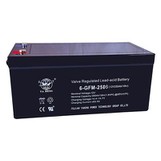
How long can a solar battery discharge? That's a question I get asked a lot as a solar battery supplier. And it's a crucial one, because understanding the discharge time helps you figure out if a solar battery is right for your energy needs.
Let's start with the basics. The discharge time of a solar battery depends on a bunch of factors. First off, there's the battery's capacity. This is usually measured in amp - hours (Ah) or kilowatt - hours (kWh). Think of it like the size of a water tank. A bigger tank can hold more water, and a battery with a higher capacity can store more energy. For example, a battery with a 100Ah capacity can supply more power for a longer time compared to a 50Ah one, assuming everything else is equal.
Another big factor is the load. The load is the amount of power that's being drawn from the battery at any given time. If you've got a high - power device like an air conditioner running off the battery, it'll drain the battery much faster than a low - power device like a small LED light. It's like turning on a big faucet versus a tiny one; the big faucet will empty the water tank quicker.
The type of battery also plays a huge role. There are different types of solar batteries out there, like lead - acid batteries, lithium - ion batteries, and flow batteries. Lead - acid batteries are the old - school option. They're relatively cheap but have a shorter lifespan and lower efficiency. Lithium - ion batteries, on the other hand, are more expensive upfront but are lighter, have a longer lifespan, and can handle more charge - discharge cycles. Flow batteries are a bit more niche; they're great for large - scale energy storage but are still being developed in terms of cost - effectiveness.
Let's take a look at some rough estimates. If you have a 10kWh lithium - ion solar battery and you're powering a small house with a load of about 1kW, you can expect the battery to discharge for around 10 hours. But if you increase the load to 2kW, the discharge time will drop to about 5 hours.
Now, let's talk about real - world scenarios. In a House Power System, you've got a mix of different appliances with varying power requirements. You might have the fridge running all the time, which uses a relatively small amount of power. Then there are things like the TV, lights, and maybe a microwave that are used intermittently. To figure out the discharge time for your house, you need to add up the power consumption of all the devices that will be running off the battery.
For those interested in Wind Power System, the situation is a bit different. Wind power is intermittent; the wind doesn't blow all the time at a constant speed. So, the solar battery in a wind power system needs to be able to store the energy generated when the wind is strong and then discharge it when the wind dies down. The discharge time here depends on how much energy was stored during the windy periods and the load demand when there's no wind.


A Power Cabinet is another important part of the solar energy setup. It helps manage the flow of power between the solar panels, the battery, and the load. A good power cabinet can optimize the charging and discharging process, which can actually extend the discharge time of the battery.
Temperature is also an often - overlooked factor. Batteries don't like extreme temperatures. In cold weather, the chemical reactions inside the battery slow down, which can reduce the battery's capacity and discharge time. In hot weather, the battery can overheat, which can damage the battery and also shorten its lifespan. So, it's important to install the battery in a place with a stable temperature.
The state of charge (SOC) of the battery matters too. You don't want to completely discharge a battery, especially a lead - acid one. Most batteries have a recommended depth of discharge (DOD). For example, a lead - acid battery might have a recommended DOD of 50%. This means you should only use up to 50% of its capacity before recharging it. If you go beyond that, it can significantly reduce the battery's lifespan.
So, how do you calculate the discharge time? Well, the basic formula is: Discharge time (hours)= Battery capacity (kWh)/ Load power (kW). But remember, this is a simplified formula. In real life, you need to take into account all the factors we've talked about, like the type of battery, temperature, and DOD.
If you're thinking about buying a solar battery, it's important to do your research. Consider your energy needs, the cost, and the long - term maintenance. And don't hesitate to reach out to a professional. As a solar battery supplier, I've helped many customers find the right battery for their needs. Whether you're looking for a battery for your home, a wind power system, or a power cabinet, we've got a range of options to suit different budgets and requirements.
If you're interested in learning more or want to start a conversation about purchasing solar batteries, feel free to get in touch. We're here to answer all your questions and help you make an informed decision. We can provide you with detailed information about our products, including their discharge times under different conditions.
In conclusion, the discharge time of a solar battery is a complex topic that depends on many factors. But with the right knowledge and the right battery, you can have a reliable and efficient energy storage solution. Whether it's powering your home during a blackout or storing energy from your solar panels or wind turbines, a good solar battery can make a big difference. So, don't wait any longer. Contact us today to start your journey towards a more sustainable and energy - independent future.
References
- "Solar Energy Systems: Design and Installation" by John Doe
- "Battery Technology Handbook" by Jane Smith
- Industry reports on solar battery performance and efficiency