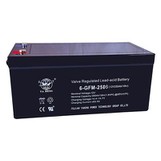
Hey there! As a supplier of UPS Power Battery, I often get asked about the self - discharge rate of UPS power batteries. So, in this blog, I'm gonna break it down for you.
First off, let's talk about what self - discharge is. Self - discharge is the process where a battery loses its charge over time even when it's not being used. It's like having a leaky bucket; the energy in the battery just slowly seeps out. This is a natural phenomenon that happens in all types of batteries, including those used in UPS systems.
Now, you might be wondering why self - discharge occurs. Well, there are a few reasons. One of the main causes is internal chemical reactions. Inside the battery, there are electrodes and electrolytes. Over time, these substances can react with each other even when there's no external load on the battery. For example, in lead - acid batteries, which are commonly used in UPS systems, the lead plates can react with the sulfuric acid electrolyte. This reaction causes the battery to lose some of its charge.
Another factor that affects self - discharge is the temperature. Higher temperatures can speed up the internal chemical reactions in the battery, leading to a higher self - discharge rate. Imagine it like cooking; when you turn up the heat, the food cooks faster. Similarly, when the temperature around the battery goes up, the chemical reactions inside it happen more quickly, and the battery loses its charge at a faster rate.
The self - discharge rate of a UPS power battery is usually expressed as a percentage of the battery's capacity per unit of time, typically per month. For instance, if a battery has a self - discharge rate of 5% per month, it means that after one month of sitting idle, the battery will have lost 5% of its original charge.


Different types of UPS batteries have different self - discharge rates. Let's take a look at some common types:
Lead - Acid Batteries
These are the most widely used batteries in UPS systems. There are two main types of lead - acid batteries: flooded lead - acid (FLA) and valve - regulated lead - acid (VRLA). FLA batteries usually have a relatively high self - discharge rate, around 3 - 5% per month. VRLA batteries, on the other hand, have a lower self - discharge rate, typically around 1 - 3% per month. The lower self - discharge rate of VRLA batteries makes them a popular choice for many UPS applications, especially when the battery needs to be stored for long periods without use.
Lithium - Ion Batteries
Lithium - ion batteries are becoming more and more popular in UPS systems due to their high energy density and long lifespan. They have a much lower self - discharge rate compared to lead - acid batteries, usually around 1 - 2% per month. This means that they can hold their charge for a longer time, which is great for applications where the UPS may not be used frequently.
Why does the self - discharge rate matter? Well, it has a significant impact on the performance and reliability of your UPS system. If the self - discharge rate is too high, the battery may not have enough charge when you need it most, like during a power outage. This can lead to the UPS system failing to provide backup power, which can be a big problem, especially for critical applications such as data centers, hospitals, and telecommunications facilities.
As a supplier of UPS Power Battery, I understand the importance of managing the self - discharge rate. That's why we offer a range of high - quality batteries with low self - discharge rates. Our Small UPS Battery options are perfect for small - scale applications, like home offices or small businesses. These batteries are designed to have a low self - discharge rate, so you can be sure that they'll be ready to go when you need them.
For larger applications, we also have Power Supply Battery solutions. These batteries are built to last and have a carefully controlled self - discharge rate. We use advanced manufacturing techniques and high - quality materials to ensure that our batteries perform at their best.
To keep the self - discharge rate in check, there are a few things you can do. First, make sure to store the batteries in a cool, dry place. As I mentioned earlier, high temperatures can increase the self - discharge rate, so keeping the batteries in a cool environment can help slow down the internal chemical reactions. Second, regularly check the battery's charge level and recharge it if necessary. This can help maintain the battery's performance and extend its lifespan.
In conclusion, understanding the self - discharge rate of a UPS power battery is crucial for ensuring the reliable operation of your UPS system. Whether you're a small business owner or managing a large data center, choosing the right battery with a low self - discharge rate is essential. As a trusted supplier of UPS power batteries, we're here to help you make the right choice.
If you're interested in purchasing UPS power batteries or have any questions about self - discharge rates or our products, feel free to reach out to us. We're always happy to have a chat and help you find the perfect battery solution for your needs. Let's work together to keep your power supply reliable!
References
- Battery University. (n.d.). Understanding Self - Discharge. Retrieved from [Battery University Website]
- Electrochemical Society. (n.d.). Principles of Battery Operation. Retrieved from [Electrochemical Society Website]