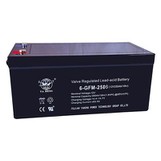
When it comes to small UPS (Uninterruptible Power Supply) batteries, one of the most frequently asked questions is: "What is the recommended load for a small UPS battery?" As a supplier of Small UPS Batteries, I am here to provide you with a comprehensive answer to this crucial question.
Understanding the Basics of Small UPS Batteries
Before delving into the recommended load, it's essential to understand what small UPS batteries are and how they function. Small UPS batteries are designed to provide temporary power during a power outage or when there are fluctuations in the main power supply. They are commonly used in home offices, small businesses, and for powering sensitive electronic devices such as computers, routers, and servers.


Small UPS batteries come in various capacities, typically measured in volt - ampere (VA) or watt - hours (Wh). The VA rating represents the apparent power, while the watt - hour rating indicates the actual power that can be delivered over a period of time. For example, a small UPS battery with a 300VA rating can handle a certain amount of electrical load, but the actual power it can supply in watts depends on the power factor of the connected devices.
Factors Affecting the Recommended Load
Several factors influence the recommended load for a small UPS battery.
1. Battery Capacity
The capacity of the battery is the most obvious factor. A higher - capacity battery can support a larger load for a longer period. For instance, a small UPS battery with a 500VA capacity can generally handle a heavier load compared to a 300VA battery. However, it's important to note that the actual power output in watts may vary depending on the battery's design and the power factor of the connected devices.
2. Power Factor of Connected Devices
The power factor is a measure of how effectively a device uses electrical power. Devices with a high power factor (close to 1) use electrical power more efficiently than those with a low power factor. For example, a resistive load like an incandescent light bulb has a power factor of almost 1, while a device with a large number of electronic components, such as a computer power supply, may have a power factor of 0.6 - 0.8. When calculating the recommended load, you need to consider the power factor of the connected devices. The formula to convert VA to watts is: Watts = VA × Power Factor.
3. Runtime Requirements
The length of time you need the UPS to provide power also affects the recommended load. If you only need the UPS to supply power for a few minutes to allow for a proper shutdown of your devices, you can typically load the UPS closer to its maximum capacity. However, if you require the UPS to run your devices for an extended period, say 30 minutes or more, you should reduce the load to ensure that the battery can last long enough.
Calculating the Recommended Load
To calculate the recommended load for a small UPS battery, follow these steps:
Step 1: Determine the Power Requirements of Your Devices
Make a list of all the devices you want to connect to the UPS. Check the power ratings (in watts) of each device. You can usually find this information on the device's label or in the user manual. For example, a desktop computer may consume 200 - 300 watts, a monitor 50 - 100 watts, and a router 10 - 20 watts.
Step 2: Consider the Power Factor
As mentioned earlier, multiply the VA rating of the UPS by the power factor of the connected devices to get the actual power in watts that the UPS can supply. For example, if you have a 300VA UPS and the average power factor of your connected devices is 0.7, the actual power available in watts is 300 × 0.7 = 210 watts.
Step 3: Calculate the Total Load
Add up the power requirements of all the devices you want to connect to the UPS. Make sure that the total load does not exceed the actual power available in watts. As a general rule of thumb, it's recommended to load the UPS to no more than 80% of its rated capacity to ensure reliable operation and a longer battery life. For example, if your 300VA UPS can supply 210 watts (after considering the power factor), you should aim to keep the total load of your connected devices below 210 × 0.8 = 168 watts.
Examples of Recommended Loads for Different Small UPS Batteries
Let's take a look at some examples of recommended loads for common small UPS batteries.
300VA Small UPS Battery
Assuming a power factor of 0.7, the actual power available in watts is 300 × 0.7 = 210 watts. With an 80% load limit, the recommended load should be no more than 210 × 0.8 = 168 watts. This could be used to power a small desktop computer (150 - 200 watts), a small monitor (50 - 100 watts), and a router (10 - 20 watts) for a short period.
500VA Small UPS Battery
With a power factor of 0.7, the actual power available is 500 × 0.7 = 350 watts. Applying an 80% load limit, the recommended load is 350 × 0.8 = 280 watts. This could support a larger desktop computer, a larger monitor, and a few other small devices such as a printer or a scanner for a longer period.
Our Small UPS Battery Products
At our company, we offer a wide range of high - quality Small UPS Battery products. Our batteries are designed to provide reliable power backup for your critical electronic devices. Whether you need a small UPS battery for your home office or a small business, we have the right solution for you.
In addition to our Small UPS Batteries, we also supply Jump Starter Battery and UPS Power Battery. Our jump starter batteries are perfect for quickly starting your vehicle in case of a dead battery, while our UPS power batteries provide long - lasting power backup for larger systems.
Conclusion and Call to Action
Determining the recommended load for a small UPS battery is crucial for ensuring the reliable operation of your electronic devices during a power outage. By considering factors such as battery capacity, power factor, and runtime requirements, you can calculate the appropriate load for your UPS.
If you are in the market for a small UPS battery or any other battery products, we invite you to contact us for more information. Our team of experts can help you choose the right battery for your specific needs and provide you with detailed guidance on load calculations. Don't let a power outage disrupt your work or damage your valuable electronic devices. Reach out to us today to start the procurement process and ensure that you have a reliable power backup solution.
References
- "UPS Systems Handbook" by Robert C. Dugan, Mark F. McGranaghan, and Surya Santoso.
- "Electrical Engineering: Principles and Applications" by Allan R. Hambley.