Hey there! As a supplier of House Power System, I often get asked about the power rating of a typical house power system. So, I thought I'd take a moment to break it down for you.
First off, let's understand what power rating means. Power rating is basically the amount of power a system can handle or produce. It's usually measured in watts (W) or kilowatts (kW). For a house power system, this rating tells us how much electrical energy the system can supply to all the appliances and devices in your home.
Now, the power rating of a typical house power system can vary quite a bit depending on several factors. One of the main factors is the size of the house. A larger house with more rooms and more appliances will generally need a higher power rating system compared to a smaller one. For example, a small apartment might get by with a system rated at around 5 - 10 kW. This could power basic appliances like a refrigerator, a few lights, a TV, and a small computer.


On the other hand, a big family home with multiple air - conditioners, electric heaters, a dishwasher, a washing machine, and other high - power appliances might need a system rated at 20 kW or more. Think about it - an air - conditioner can easily consume 1 - 3 kW per hour, and if you have a few running at the same time, that adds up quickly.
Another factor that affects the power rating is the lifestyle of the occupants. If you're someone who loves cooking with electric stoves and ovens, or you have a home gym with power - hungry equipment, you'll need a higher power rating. Some people also like to charge their electric vehicles at home, which can require a significant amount of power.
There are different types of house power systems, and each has its own characteristics when it comes to power rating. One popular option is the grid - connected system. This system is connected to the main electrical grid, and it can draw power from the grid when needed. The power rating of a grid - connected system is often determined by the capacity of the connection to the grid. In most residential areas, the grid connection can support a power rating of around 10 - 30 kW.
Then there are off - grid systems. These are self - sufficient systems that rely on renewable energy sources like solar panels or Wind Power System. Off - grid systems need to be carefully sized to meet the power needs of the house. For instance, a solar power system with a battery backup. The power rating of the solar panels determines how much power can be generated during the day, and the battery for solar power system stores the excess energy for use at night or on cloudy days.
Let's talk a bit more about solar power systems. The power rating of solar panels is usually given in watts. A typical solar panel might have a power rating of around 250 - 400 watts. To calculate the total power rating of a solar power system, you simply add up the power ratings of all the panels. For example, if you have 20 solar panels each rated at 300 watts, your system has a total power rating of 6000 watts or 6 kW.
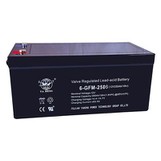
Now, when it comes to batteries for solar power systems, their capacity is measured in amp - hours (Ah) and voltage (V). To convert this to watts, you multiply the amp - hours by the voltage. A common deep - cycle battery might have a capacity of 100 Ah at 12 V, which is equivalent to 1200 watt - hours or 1.2 kWh.
As a House Power System supplier, I've seen all sorts of situations. Sometimes, customers underestimate their power needs and end up with a system that can't keep up. Other times, they over - estimate and end up spending more money than necessary. That's why it's so important to do a proper load calculation before choosing a system.
A load calculation involves making a list of all the appliances and devices in your home, noting their power consumption (usually found on the appliance label), and estimating how long each one will be used per day. This gives you an idea of your daily power consumption, which helps in determining the right power rating for your system.
For example, let's say you have a refrigerator that consumes 150 watts and runs 24 hours a day, a TV that uses 100 watts and is on for 5 hours a day, and a few lights that use a total of 50 watts and are on for 6 hours a day. The total daily power consumption would be:
Refrigerator: 150 W x 24 h = 3600 Wh or 3.6 kWh
TV: 100 W x 5 h = 500 Wh or 0.5 kWh
Lights: 50 W x 6 h = 300 Wh or 0.3 kWh
Total: 3.6 + 0.5+ 0.3 = 4.4 kWh
Based on this calculation, you can then choose a House Power System that can meet or exceed this daily requirement.
If you're in the process of setting up a new house power system or looking to upgrade your existing one, I'd be more than happy to help. I've got a wide range of products and solutions to suit different needs and budgets. Whether you're interested in a grid - connected system, an off - grid solar power setup, or something in between, I can guide you through the process.
Contact me to discuss your specific requirements, and we can work together to find the perfect house power system for you. Let's make sure your home has a reliable and efficient power supply that meets all your needs.
References:
- Electrical Engineering textbooks on power systems
- Manufacturer specifications of various household appliances
- Industry reports on residential power consumption trends