Can I use any charger for my wheel chair battery?
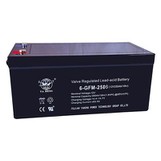
As a supplier of Wheel Chair Battery, I often get asked the question: "Can I use any charger for my wheelchair battery?" It's a crucial query that every wheelchair user should understand to ensure the longevity and proper functioning of their battery.
Understanding Wheelchair Batteries
Wheelchair batteries are typically lead - acid batteries, which come in two main types: sealed lead - acid (SLA) and flooded lead - acid. SLA batteries are maintenance - free and more commonly used in modern wheelchairs. They are sealed, so there's no need to add water, and they can be mounted in various positions without the risk of acid leakage. Flooded lead - acid batteries, on the other hand, require regular maintenance, including checking and topping up the electrolyte levels.
The voltage and capacity of wheelchair batteries can vary. Common voltages are 12V, and capacities range from around 12Ah to 35Ah or more. The capacity determines how long the battery can power the wheelchair before it needs to be recharged. For example, a wheelchair with a 12Ah battery will generally run for a shorter period compared to one with a 35Ah battery under the same usage conditions.
The Role of Chargers
A charger is responsible for replenishing the energy in the wheelchair battery. It converts the alternating current (AC) from the power outlet into direct current (DC) that the battery can store. A proper charger will also control the charging process to prevent overcharging, which can damage the battery.
Overcharging can cause the battery to heat up, leading to the evaporation of the electrolyte in flooded lead - acid batteries or the drying out of the internal components in SLA batteries. This can significantly reduce the battery's lifespan and performance. Undercharging, on the other hand, can result in sulfation, where lead sulfate crystals build up on the battery plates, reducing the battery's ability to hold a charge.


Why You Can't Use Any Charger
- Voltage Compatibility: Different wheelchair batteries have different voltage requirements. Using a charger with the wrong voltage can be extremely dangerous. If the charger voltage is too high, it can cause excessive current to flow into the battery, leading to overheating, gassing, and potentially an explosion. For instance, if you have a 12V wheelchair battery and use a 24V charger, the battery will be subjected to a much higher voltage than it can handle.
- Charging Current: Chargers also vary in terms of the charging current they provide. A charger with a too - high charging current can charge the battery too quickly, causing damage to the battery's internal structure. A charger with a too - low charging current, on the other hand, will take an unreasonably long time to charge the battery and may not fully charge it, leading to undercharging issues.
- Charging Algorithm: Modern chargers use specific charging algorithms to ensure the battery is charged safely and efficiently. These algorithms may include stages such as bulk charging, absorption charging, and float charging. Using a charger without the appropriate algorithm for your wheelchair battery can result in improper charging, reducing the battery's lifespan and performance.
Choosing the Right Charger
- Match the Voltage: The charger's voltage should exactly match the voltage of your wheelchair battery. If your battery is 12V, you need a 12V charger.
- Consider the Charging Current: The charging current should be appropriate for the battery's capacity. A general rule of thumb is that the charging current should be around 10% - 20% of the battery's capacity. For example, for a 20Ah battery, a charging current of 2A - 4A would be suitable.
- Look for Quality Chargers: It's advisable to choose chargers from reputable manufacturers. Quality chargers are more likely to have proper safety features and accurate charging algorithms. For example, Motivation Battery chargers are designed with advanced technology to ensure the safe and efficient charging of various types of batteries, including wheelchair batteries.
Comparison with Other Electric Vehicle Batteries
It's interesting to compare wheelchair batteries with Electric Golf Cart Battery. Golf cart batteries are usually larger in capacity and may require different chargers. Golf cart batteries often have a higher voltage, such as 36V or 48V, compared to the typical 12V wheelchair batteries. The charging requirements for golf cart batteries are also more complex due to their larger size and higher power demands.
Conclusion and Call to Action
In conclusion, you cannot use any charger for your wheelchair battery. Using the wrong charger can lead to serious damage to the battery, reducing its lifespan and potentially putting your safety at risk. As a supplier of high - quality Wheel Chair Battery, we understand the importance of proper charging. We offer a range of chargers that are specifically designed to match the voltage, capacity, and charging requirements of our wheelchair batteries.
If you have any questions about choosing the right charger for your wheelchair battery or are interested in purchasing our products, we encourage you to reach out to us. Our team of experts is ready to assist you in making the best decision for your wheelchair battery needs.
References
- Battery University: A comprehensive resource for battery knowledge and charging information.
- Manufacturer's manuals for wheelchair batteries and chargers.