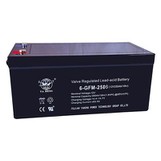
Hey there! As a supplier of Small UPS Batteries, I often get asked a bunch of questions from customers. One question that pops up quite a bit is, "Is it normal for a small UPS battery to get warm during charging?" Let's dig into this topic and find out what's going on.
First off, let's understand what a UPS battery is. A UPS, or Uninterruptible Power Supply, is a device that provides emergency power to a load when the input power source fails. The UPS Power Battery is the heart of the UPS system, storing energy so it can be used when needed. Small UPS batteries are commonly used in homes, small offices, and for protecting sensitive electronic equipment like computers, routers, and servers. You can check out our Small UPS Battery options on our website.
Now, back to the main question - getting warm during charging. It's actually completely normal for a small UPS battery to get a bit warm when it's being charged. When you charge a battery, a chemical reaction occurs inside it. This chemical reaction involves the movement of ions between the battery's electrodes. During this process, some energy is lost in the form of heat. So, a little bit of warmth is just a natural by - product of the charging process.
Think of it like when you're working out. Your body burns calories and generates heat as you exercise. Similarly, the battery is "working" when it's charging, and that work results in some heat production. However, there's a difference between a normal, slightly warm battery and an overheating one.
A battery that's just getting normally warm during charging should feel only slightly warm to the touch. You should be able to keep your hand on it for a few seconds without feeling any discomfort. If the battery is so hot that you can't touch it, or if it's emitting a strange smell or making unusual noises, then there's definitely a problem.
There are a few reasons why a small UPS battery might overheat. One common reason is overcharging. If the charger is supplying too much voltage or current to the battery, it can cause the chemical reactions inside the battery to go haywire. This can lead to excessive heat production and can even damage the battery in the long run.
Another factor could be the environment. If the battery is placed in a hot and poorly - ventilated area, it won't be able to dissipate the heat properly. For example, if you've placed your UPS in a closed cabinet with no air circulation, the heat will build up around the battery, making it hotter than normal.
The age of the battery also plays a role. As a battery gets older, its internal resistance increases. Higher internal resistance means more energy is converted into heat during the charging process. So, an older battery is more likely to get warmer during charging compared to a brand - new one.
Now, let's talk about the different types of UPS systems and how they can affect battery heating. There are mainly two types of UPS systems: offline UPS and On - line UPS.
In an offline UPS, the battery is only used when there's a power outage. The charger in an offline UPS is usually a simple design. It might not have the most advanced charging algorithms to regulate the charging process precisely. This can sometimes lead to a bit more heat generation during charging.
On the other hand, an on - line UPS continuously powers the load through the battery and inverter, even when the main power is available. The charging system in an on - line UPS is often more sophisticated. It can better control the charging current and voltage, which generally results in more efficient charging and less heat production.
So, what can you do to ensure that your small UPS battery doesn't overheat? First, make sure you're using the right charger for your battery. Using an incompatible charger can lead to overcharging and overheating. Always follow the manufacturer's recommendations when it comes to charging.
Second, pay attention to the environment where the UPS is placed. Make sure there's good air circulation around the UPS. You can place it in an open area or use a fan to help with ventilation.
Also, keep an eye on the battery's age. If your battery is getting old and starts to overheat more frequently, it might be time to replace it. A new battery will not only charge more efficiently but also reduce the risk of overheating.
In conclusion, a small amount of warmth during charging is normal for a small UPS battery. It's just a sign that the battery is doing its job. But if the battery is extremely hot, smells bad, or makes strange noises, it's a red flag that something's wrong.
If you're in the market for a new small UPS battery or have any questions about battery charging and overheating, don't hesitate to reach out. We're here to help you make the right choice for your power protection needs. Whether you're a home user or a small business owner, we've got the right Small UPS Battery for you. Let's start a conversation and find the perfect solution for your requirements.
References:


- Battery Technology Handbook
- UPS System Design and Maintenance Guides