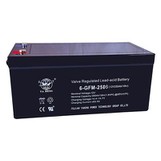
Hey there! As a supplier of power supply batteries, I often get asked about the internal resistance of these batteries. So, let's dig into what the internal resistance of a power supply battery is and why it matters.
First off, what exactly is internal resistance? Well, think of it like this. When you have a power supply battery, it's not just a perfect source of energy that gives out power without any losses. Inside the battery, there are all sorts of chemical reactions happening to produce electricity. But these reactions don't happen in a completely smooth and friction - free way. The internal resistance is kind of like the "friction" within the battery that resists the flow of electric current.
You can picture a battery as a combination of an ideal voltage source and a resistor. The ideal voltage source is what we'd like the battery to be - it would just provide a constant voltage without any issues. But the internal resistor, which represents the internal resistance, is always there, causing some problems.
Let's talk about how internal resistance affects the performance of a battery. One of the most obvious impacts is on the output voltage. When a battery is connected to a load (like a device that uses the electricity), current starts to flow. According to Ohm's law (V = IR, where V is voltage, I is current, and R is resistance), the internal resistance causes a voltage drop. So, the voltage that the load actually gets is lower than the battery's open - circuit voltage (the voltage when no load is connected).
For example, if you have a battery with an open - circuit voltage of 12 volts and an internal resistance of 0.1 ohms, and you connect a load that draws a current of 10 amps. The voltage drop across the internal resistance is V = IR = 10 A×0.1 Ω = 1 volt. So, the voltage at the terminals of the battery when the load is connected is 12 V - 1 V = 11 volts.
Another important aspect is the efficiency of the battery. Since the internal resistance causes a voltage drop and also dissipates power in the form of heat (P = I²R, where P is power), it reduces the overall efficiency of the battery. The power that is wasted as heat is power that could have been used by the load. This is especially a problem in high - current applications. For instance, in a Small UPS Battery, which might need to supply a relatively large current during a power outage, a high internal resistance can lead to a significant loss of power and overheating of the battery.
The internal resistance of a battery is not a fixed value. It can change depending on several factors. One of the main factors is the state of charge of the battery. As the battery discharges, the internal resistance usually increases. This is because the chemical reactions inside the battery change as the charge is depleted, and the electrolyte's conductivity may also decrease.
Temperature also has a big impact on internal resistance. In general, as the temperature decreases, the internal resistance increases. This is because the chemical reactions slow down at lower temperatures, and the movement of ions in the electrolyte becomes more difficult. On the other hand, at very high temperatures, the internal resistance may also increase due to degradation of the battery's components.
The age and usage history of the battery are also crucial. Over time, as the battery is charged and discharged multiple times, the electrodes can degrade, and the electrolyte can change. This leads to an increase in internal resistance. A battery that has been used in harsh conditions, like being frequently over - charged or over - discharged, will likely have a higher internal resistance compared to a well - maintained battery.
Now, why should you care about the internal resistance when you're looking to buy a power supply battery? Well, if you're using the battery in a critical application, like an On - line UPS, a low internal resistance is essential. A UPS needs to be able to supply power quickly and efficiently during a power outage. A battery with high internal resistance may not be able to deliver the required current, and the voltage drop may cause the connected equipment to malfunction.
For industrial applications, where large amounts of power are needed, a low - internal - resistance battery can save a lot of energy and money in the long run. The lower the internal resistance, the more efficient the battery is, and the less power is wasted as heat. This not only reduces operating costs but also extends the lifespan of the battery and the connected equipment.


As a power supply battery supplier, I know how important it is to choose the right battery with the appropriate internal resistance for your specific needs. We offer a wide range of UPS Power Battery options, and we can help you select the one that best suits your requirements. Whether you need a battery for a small home UPS or a large industrial power backup system, we've got you covered.
If you're in the market for a power supply battery and want to learn more about how internal resistance affects your application, or if you just want to discuss your battery needs, don't hesitate to reach out. We're here to answer all your questions and help you make an informed decision.
In conclusion, understanding the internal resistance of a power supply battery is key to getting the most out of your battery. It affects the voltage output, efficiency, and overall performance of the battery. By choosing a battery with the right internal resistance for your application, you can ensure reliable and efficient power supply.
References
- Dorf, R. C., & Svoboda, J. A. (2019). Introduction to Electric Circuits. Wiley.
- Linden, D., & Reddy, T. B. (2002). Handbook of Batteries. McGraw - Hill.