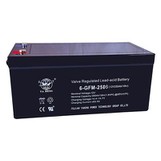
As a supplier of Bi - Polar Batteries, understanding how to measure the state - of - health (SOH) of these batteries is crucial. It not only helps us in providing better products to our customers but also in ensuring the long - term performance and reliability of the batteries we supply. In this blog, I will delve into the various methods and factors involved in measuring the SOH of a Bi - Polar Battery.
What is the State - of - Health of a Battery?
The state - of - health of a battery is an indicator of its overall condition compared to a fresh, new battery. It reflects the battery's ability to store and deliver energy as it was originally designed. For Bi - Polar Batteries, which include [Bi - Polar SLA Battery](/bi - polar - battery/bi - polar - sla - battery.html) and [Bi - Polar Lead Acid Battery](/bi - polar - battery/bi - polar - lead - acid - battery.html), the SOH is affected by factors such as cycling, temperature, and self - discharge.
Key Factors Affecting the SOH of Bi - Polar Batteries
Cycling
Cycling refers to the process of charging and discharging a battery. Each cycle causes some degree of wear and tear on the battery's electrodes and electrolyte. In Bi - Polar Batteries, repeated cycling can lead to the degradation of the active materials on the electrodes, which in turn reduces the battery's capacity. For example, in a lead - acid Bi - Polar Battery, the formation of lead sulfate crystals during discharge and their incomplete conversion back to lead and lead dioxide during charging can gradually accumulate and cause capacity loss.
Temperature
Temperature has a significant impact on the SOH of Bi - Polar Batteries. High temperatures can accelerate the chemical reactions inside the battery, leading to increased self - discharge and faster degradation of the active materials. On the other hand, low temperatures can reduce the battery's performance by increasing the internal resistance. For instance, in [Flat Battery Power Solar](/bi - polar - battery/flat - battery - power - solar.html) applications, where the battery may be exposed to a wide range of temperatures, proper temperature management is essential to maintain a good SOH.
Self - Discharge
Self - discharge is the process by which a battery loses its charge over time even when it is not in use. In Bi - Polar Batteries, self - discharge can be caused by internal short - circuits, side reactions in the electrolyte, or the presence of impurities. A high self - discharge rate can lead to a reduced SOH, as the battery will not be able to hold its charge for as long as it should.
Methods for Measuring the SOH of Bi - Polar Batteries
Capacity Testing
Capacity testing is one of the most direct ways to measure the SOH of a battery. It involves fully charging the battery and then discharging it at a constant current until it reaches a predefined cut - off voltage. The amount of charge that the battery can deliver during the discharge process is its capacity. By comparing the measured capacity with the battery's rated capacity, we can determine its SOH. For example, if a new Bi - Polar Battery has a rated capacity of 100 Ah and after several cycles, it can only deliver 80 Ah during a capacity test, its SOH is 80%.
However, capacity testing can be time - consuming and may require specialized equipment. It also subjects the battery to a full charge - discharge cycle, which can further contribute to its degradation if not done properly.
Voltage Measurement
Voltage measurement is a simple and commonly used method to estimate the SOH of a battery. The open - circuit voltage (OCV) of a battery is related to its state of charge (SOC) and SOH. As a battery ages and its SOH decreases, its OCV at a given SOC will also change. By measuring the OCV of a Bi - Polar Battery and comparing it with the OCV of a new battery at the same SOC, we can get an indication of its SOH.
For example, in a lead - acid Bi - Polar Battery, a fully charged new battery may have an OCV of around 2.15 V per cell, while an aged battery with a lower SOH may have an OCV of 2.10 V per cell at the same state of charge. However, voltage measurement alone may not provide a very accurate assessment of the SOH, as the OCV can also be affected by factors such as temperature and the battery's recent charging history.


Internal Resistance Measurement
Internal resistance is another important parameter for measuring the SOH of a battery. As a battery ages, its internal resistance increases due to factors such as the degradation of the electrodes and the electrolyte. Measuring the internal resistance of a Bi - Polar Battery can be done using various methods, such as the AC impedance method or the DC pulse method.
The AC impedance method involves applying a small AC signal to the battery and measuring the resulting voltage and current. The internal resistance can then be calculated from the impedance spectrum. The DC pulse method, on the other hand, involves applying a short - duration DC pulse to the battery and measuring the voltage change. A higher internal resistance indicates a lower SOH, as it means that more energy is being lost as heat during the charging and discharging process.
Electrochemical Impedance Spectroscopy (EIS)
EIS is a more advanced technique for measuring the SOH of a battery. It involves applying a small - amplitude AC signal over a wide range of frequencies to the battery and measuring the impedance response. The impedance spectrum obtained from EIS can provide detailed information about the different electrochemical processes occurring inside the battery, such as charge transfer, diffusion, and double - layer capacitance.
By analyzing the changes in the impedance spectrum over time, we can detect the early signs of battery degradation and accurately determine its SOH. However, EIS requires specialized equipment and expertise, and the analysis of the impedance spectrum can be complex.
Combining Multiple Methods for Accurate SOH Measurement
To obtain a more accurate measurement of the SOH of a Bi - Polar Battery, it is often necessary to combine multiple methods. For example, we can first use voltage measurement and internal resistance measurement as quick and simple screening methods to get a general idea of the battery's condition. Then, we can perform capacity testing or EIS for a more detailed and accurate assessment.
Importance of Measuring SOH for Our Customers
As a Bi - Polar Battery supplier, measuring the SOH of our batteries is of great importance to our customers. For those using our [Bi - Polar SLA Battery](/bi - polar - battery/bi - polar - sla - battery.html) in backup power systems, knowing the SOH can help them plan for battery replacement in advance, preventing unexpected power outages. In the case of [Flat Battery Power Solar](/bi - polar - battery/flat - battery - power - solar.html) applications, an accurate SOH measurement can ensure the optimal performance of the solar power system and maximize the return on investment.
Conclusion
Measuring the state - of - health of a Bi - Polar Battery is a complex but essential task. By understanding the key factors affecting the SOH and using appropriate measurement methods, we can provide our customers with high - quality batteries and accurate information about their performance. Whether you are in need of [Bi - Polar SLA Battery](/bi - polar - battery/bi - polar - sla - battery.html), [Bi - Polar Lead Acid Battery](/bi - polar - battery/bi - polar - lead - acid - battery.html), or [Flat Battery Power Solar](/bi - polar - battery/flat - battery - power - solar.html), we are committed to offering the best products and services. If you are interested in purchasing our Bi - Polar Batteries or have any questions about SOH measurement, please feel free to contact us for further discussion and procurement negotiation.
References
- Linden, D., & Reddy, T. B. (2002). Handbook of Batteries. McGraw - Hill.
- Berndt, D. (2000). Lead - Acid Batteries: Science and Technology. Springer.
- Pistoia, G. (Ed.). (2010). Batteries for Portable Devices. Elsevier.