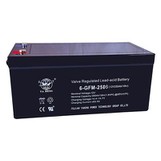
As a supplier of Power Supply Batteries, I've seen firsthand how the age of these essential components can significantly impact their performance. In this blog, I'll break down the science behind it and share some practical insights based on my experience in the industry.
Let's start with the basics. A power supply battery, whether it's a Power Supply Battery for a small electronic device or a UPS Power Battery for a critical power system, is essentially a chemical energy storage unit. Over time, the chemical reactions that occur inside the battery during charging and discharging cycles take a toll on its internal structure.
One of the most noticeable effects of an aging battery is a decrease in its capacity. Capacity refers to the amount of energy a battery can store and deliver. When a battery is new, it can typically hold a full charge and provide power for a specific period according to its design specifications. However, as the battery ages, its capacity gradually diminishes. This means that it won't be able to hold as much charge as it used to, and the device it powers will run out of juice faster.
For example, let's say you have a small electronic device that's powered by a Small UPS Battery. When the battery is brand new, it might be able to keep the device running for several hours on a single charge. But after a year or two of regular use, you might notice that the device only lasts for an hour or so before it needs to be recharged. This is a clear sign that the battery's capacity has decreased due to its age.
Another factor that's affected by the age of a power supply battery is its voltage output. Voltage is the force that pushes the electrical current through a circuit. In a healthy battery, the voltage remains relatively stable throughout the discharge cycle. However, as a battery ages, its voltage can start to fluctuate more significantly.
This voltage instability can cause problems for the devices that rely on the battery for power. For instance, if the voltage drops too low, the device might not function properly or might even shut down unexpectedly. On the other hand, if the voltage spikes too high, it could potentially damage the device's internal components.
The internal resistance of a battery also increases as it ages. Internal resistance is like a kind of electrical friction within the battery. When the internal resistance is low, the battery can deliver power efficiently. But as the resistance goes up, more energy is wasted as heat, and the battery becomes less efficient at delivering power to the device.
This increase in internal resistance can lead to a number of issues. For one, it can cause the battery to heat up more during charging and discharging, which can further accelerate the aging process. It can also reduce the overall performance of the battery, making it less able to provide the necessary power when it's needed most.
In addition to these technical factors, the age of a power supply battery can also have an impact on its reliability. An older battery is more likely to experience failures and malfunctions. It might suddenly stop working altogether, or it could start to show signs of inconsistent performance, such as intermittent power outages or slow charging times.
So, what can you do to mitigate the effects of battery aging? Well, proper maintenance is key. One of the most important things you can do is to follow the manufacturer's charging and discharging guidelines. Overcharging or deep discharging a battery can significantly shorten its lifespan.
It's also a good idea to keep the battery at a moderate temperature. Extreme heat or cold can accelerate the aging process and cause damage to the battery. If possible, store the battery in a cool, dry place when it's not in use.
Regularly testing the battery's performance can also help you catch any issues early on. There are a number of battery testing tools available on the market that can measure the battery's capacity, voltage, and internal resistance. By monitoring these parameters over time, you can get a better sense of how the battery is aging and when it might be time to replace it.
As a supplier of Power Supply Batteries, I understand the importance of providing high-quality products that can stand the test of time. That's why we carefully select our battery components and use advanced manufacturing processes to ensure that our batteries have a long lifespan and reliable performance.
If you're in the market for a new power supply battery, whether it's a Small UPS Battery, a Power Supply Battery, or a UPS Power Battery, I encourage you to reach out to us. We have a wide range of batteries to suit different applications and requirements, and our team of experts can help you find the right battery for your needs.
Don't let an aging battery compromise the performance of your devices. Contact us today to discuss your battery needs and explore our product offerings. We're here to provide you with the best solutions and ensure that you get the most out of your power supply batteries.
References


- Linden, D., & Reddy, T. B. (2002). Handbook of Batteries. McGraw-Hill.
- Berndt, D. (2006). Lead-Acid Batteries: Science and Technology. Springer.
- Karden, E., & West, A. R. (2010). Lithium Batteries: Science and Technology. Springer.