

Hey there! As a supplier of wind power systems, I often get asked about how to calculate the capacity factor of a wind power system. It's a crucial metric that gives us a clear idea of how efficiently a wind power system is operating. So, let's dive right into it!
What is the Capacity Factor?
First off, let's understand what the capacity factor means. The capacity factor of a wind power system is the ratio of the actual electrical energy produced by the system over a certain period to the maximum possible electrical energy it could have produced if it ran at its full - rated capacity during that same period.
For example, if a wind turbine has a rated capacity of 1 MW and it operates at full capacity for 24 hours a day, it would produce 24 MWh of electricity in a day. But in reality, wind doesn't blow at a constant speed all the time. So, the actual energy produced will be less than this theoretical maximum.
Why is it Important?
The capacity factor is super important for a bunch of reasons. For us as a wind power system supplier, it helps us evaluate the performance of our systems. It gives potential buyers an idea of how much energy they can expect from a wind power system over time. Investors also look at the capacity factor to assess the financial viability of a wind energy project. A higher capacity factor means more electricity generation, which usually translates into more revenue.
How to Calculate the Capacity Factor
Calculating the capacity factor of a wind power system is actually not that complicated. You just need two pieces of information: the actual energy produced by the system and the maximum possible energy it could have produced.

The formula for calculating the capacity factor (CF) is:
[CF=\frac{E_{actual}}{E_{max}}\times100%]
where (E_{actual}) is the actual electrical energy produced by the wind power system over a specific period (usually measured in kilowatt - hours, kWh or megawatt - hours, MWh), and (E_{max}) is the maximum possible electrical energy the system could have produced if it operated at its full - rated capacity during the same period.
Let's break it down further with an example. Suppose you have a wind turbine with a rated capacity of 2 MW. Over the course of a month (30 days), the turbine actually produces 1,000 MWh of electricity.
First, we need to calculate the maximum possible energy (E_{max}). Since there are 24 hours in a day, the number of hours in 30 days is (30\times24 = 720) hours.
If the turbine runs at its full - rated capacity of 2 MW (or 2,000 kW) for 720 hours, the maximum possible energy it could produce is:
[E_{max}=2000\space kW\times720\space h = 1,440,000\space kWh=1440\space MWh]
Now, we can calculate the capacity factor using the formula:
[CF=\frac{1000\space MWh}{1440\space MWh}\times100%\approx69.44%]
Factors Affecting the Capacity Factor
There are several factors that can affect the capacity factor of a wind power system.
Wind Speed
Wind speed is the most significant factor. Wind turbines have a cut - in speed, which is the minimum wind speed at which the turbine starts generating electricity. They also have a rated speed, at which they reach their maximum power output, and a cut - out speed, above which the turbine shuts down to prevent damage. If the wind speed is constantly below the cut - in speed or above the cut - out speed, the turbine won't generate much electricity, resulting in a lower capacity factor.
Turbine Design and Technology
The design and technology of the wind turbine also play a role. Modern turbines are more efficient and can capture more energy from the wind. They have better aerodynamics and control systems that allow them to operate over a wider range of wind speeds. So, a newer, more advanced turbine is likely to have a higher capacity factor than an older one.
Site Location
The location of the wind power system is crucial. Some areas have more consistent and stronger winds than others. Coastal areas, mountain passes, and high - altitude plains are often good locations for wind farms because they tend to have higher average wind speeds. If a wind turbine is installed in an area with low and variable wind speeds, its capacity factor will be lower.
Maintenance and Downtime
Regular maintenance is essential for keeping a wind power system running efficiently. If a turbine breaks down or needs maintenance, it won't be generating electricity during that time, which reduces the actual energy produced and thus the capacity factor. So, proper maintenance schedules and quick repair times are important for maintaining a high capacity factor.
Related Products and Solutions
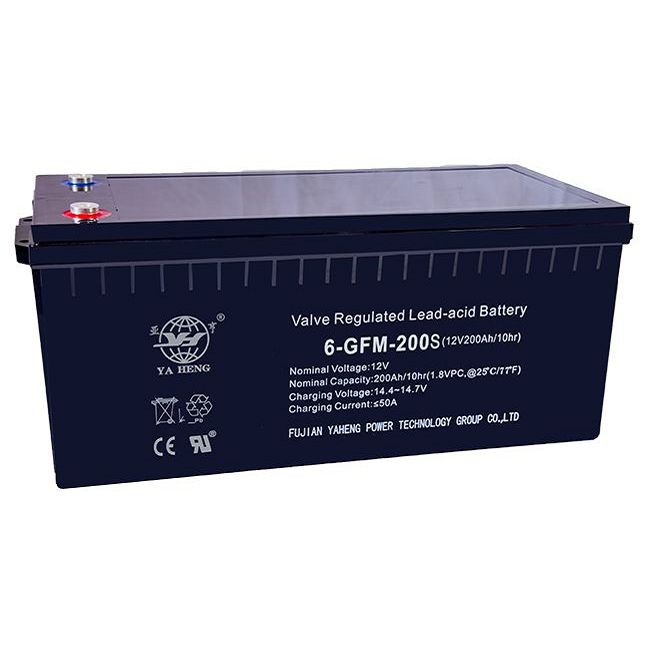
When setting up a wind power system, you might also be interested in related products like battery for solar power system. Batteries can store the excess electricity generated by the wind turbine during periods of high wind, so it can be used later when the wind is not blowing.
Another useful product is the Power Cabinet. It provides a safe and organized way to manage the electrical components of the wind power system, protecting them from the elements and ensuring reliable operation.
If you're looking to power your home with renewable energy, our House Power System is a great option. It combines wind power with other renewable energy sources to provide a stable and sustainable power supply for your household.
Conclusion
Calculating the capacity factor of a wind power system is an important step in evaluating its performance and potential. By understanding the factors that affect the capacity factor, you can make informed decisions when choosing a wind power system and its location.
As a wind power system supplier, we're here to help you every step of the way. Whether you're an individual looking to power your home or a large - scale investor planning a wind farm, we have the expertise and products to meet your needs. If you're interested in learning more about our wind power systems or have any questions about capacity factors, feel free to reach out to us for a procurement discussion. We're eager to work with you to make your renewable energy dreams a reality!
References
- “Wind Energy Basics.” National Renewable Energy Laboratory.
- “Wind Turbine Design and Operation.” Wind Energy Association.


